
Museum Collections
Anyone making even a brief visit to Dunster will quickly realise that it wears its history on it sleeve – sitting within the protection of Exmoor National Park, Dunster is well preserved to ensure that generations to come can still experience the historic nature of this ancient town.
But interpreting that history, putting it in context, understanding the way Dunster developed, and why it is now as it is, takes us beyond the picture postcard images, and into the story behind them. If you want to know more, a visit to Dunster Museum will put you on the right track.
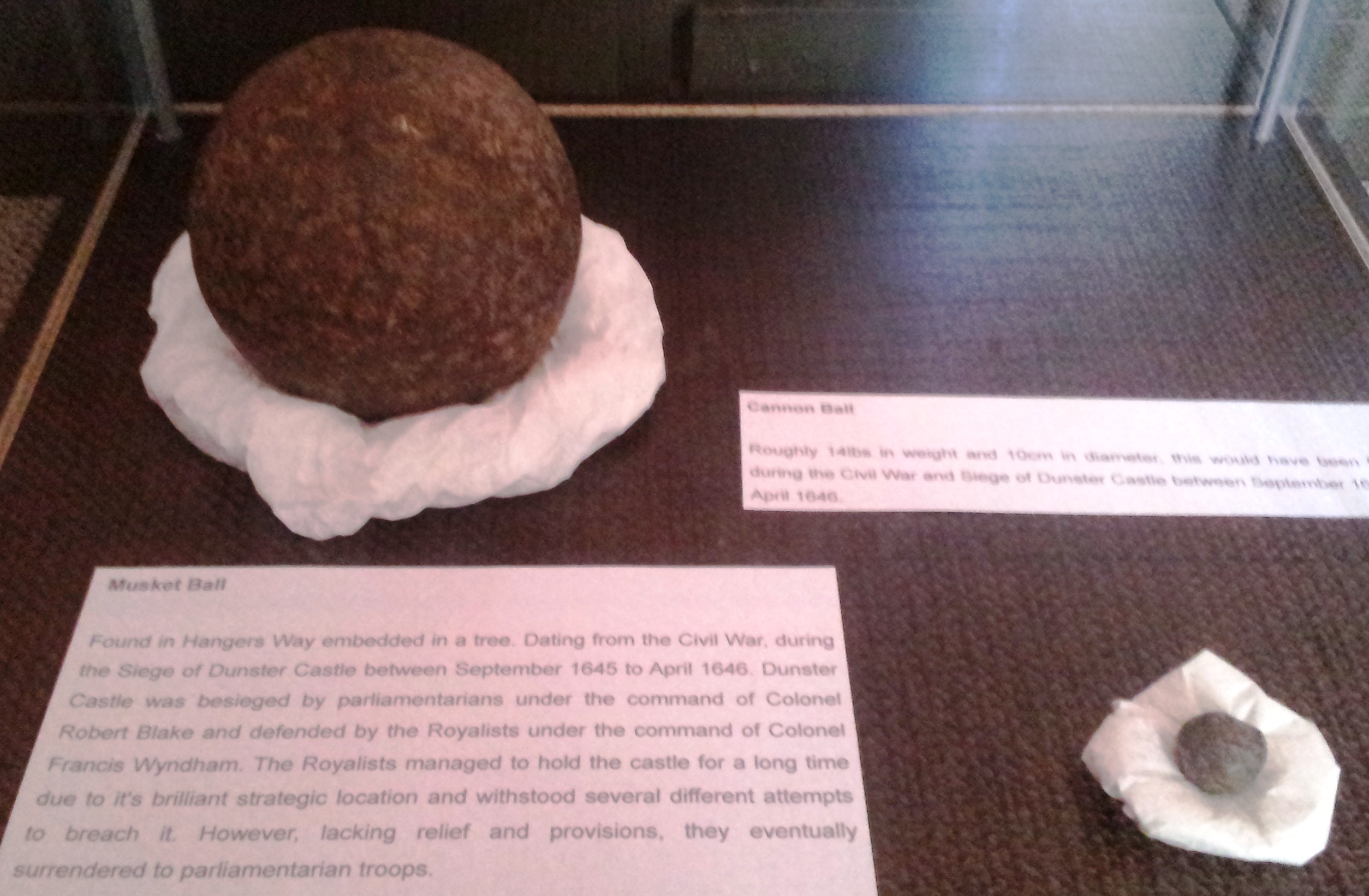
Our timeline traces 10,000 years of Dunster’s history from prehistoric evidence, through the iron age and Anglo-Saxon times, and into the Norman period, when the building of Castle and the Priory led to the development of the borough as the commercial and administrative centre of the area in late medieval times. Through the Elizabethan era and the Civil War and into the modern era, the timeline follows the peaks and troughs of Dunster’s complex past.
In-depth information panels focus on key aspects of Dunster’s history – like its wool industry, its medieval sea-port, the church & priory, and topics such as law & order and education. Amongst the local finds and artefacts on display you will see a trove of Roman pottery quite recently and unexpectedly found at Dunster beach by Dunster Museum Archaeology Group.
Some of our collection of photographs from Dunster’s more recent past are on display on a slideshow.
There is also a display about the Green Howards, a regiment usually associated with Yorkshire, but first raised in Dunster in 1688 by Colonel Francis Luttrell to support the Glorious Revolution.

First World War soldiers from the Somerset Light Infantry 
Edgar Dyer (right) with his father at the Dunster Saddlery, 1920s 
Harold Gill’s wartime railway pass 
Medieval church floor tiles 
Print your own tile patterns 
The main museum gallery (needs much better picture!) 
Buildings next door to the Museum, now Horse and Crook, and Tom Deer
Doll Collection
There are many old and interesting dolls to be seen, which come from many different periods, and many are in their original clothes. Old dolls can be compared with those from the second half of the 20th century to provide a fascinating contrast. There are Artists’ and Fashion Dolls, and a unique collection of 20 “Sasha” Dolls in 1913 period dress, and the Bristol Red Cross Dolls.
A prominent feature of the collection is the wide range of ethnic dolls illustrating the costumes of many lands and cultures. There are also dolls that will remind visitors of their childhood and nursery rhyme characters. Novelties, such as tea cosy and dressing table dolls, advertising figures and dolls made from many unusual materials can also be seen.

Egyptian Burial Doll

16th Century Plague Doll
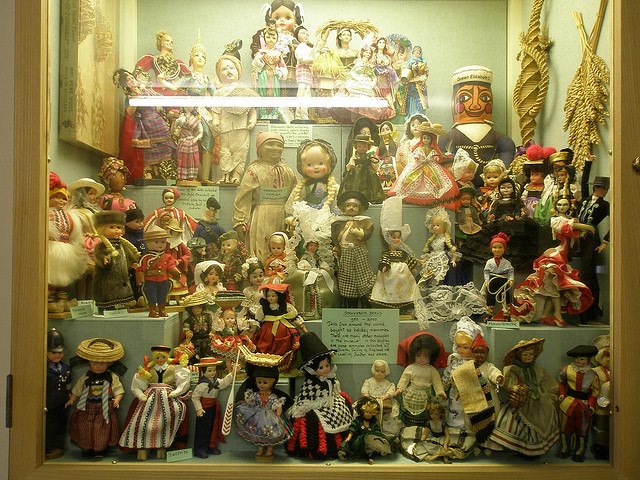
Just one of the many cases full of dolls that we have on show.